

Usually, our blogs serving our community of learners. This blog post takes a public bent as we had 68 children embarking on an entrepreneurial journey with 29 of our Eagles (these are students of Acton Academy) during the 2018 Children’s Business Fair (CBF).
The Children’s Business Fair is a yearly event. Children develop a brand, create a product or service, build a marketing strategy, and then open for customers at our one-day marketplace.
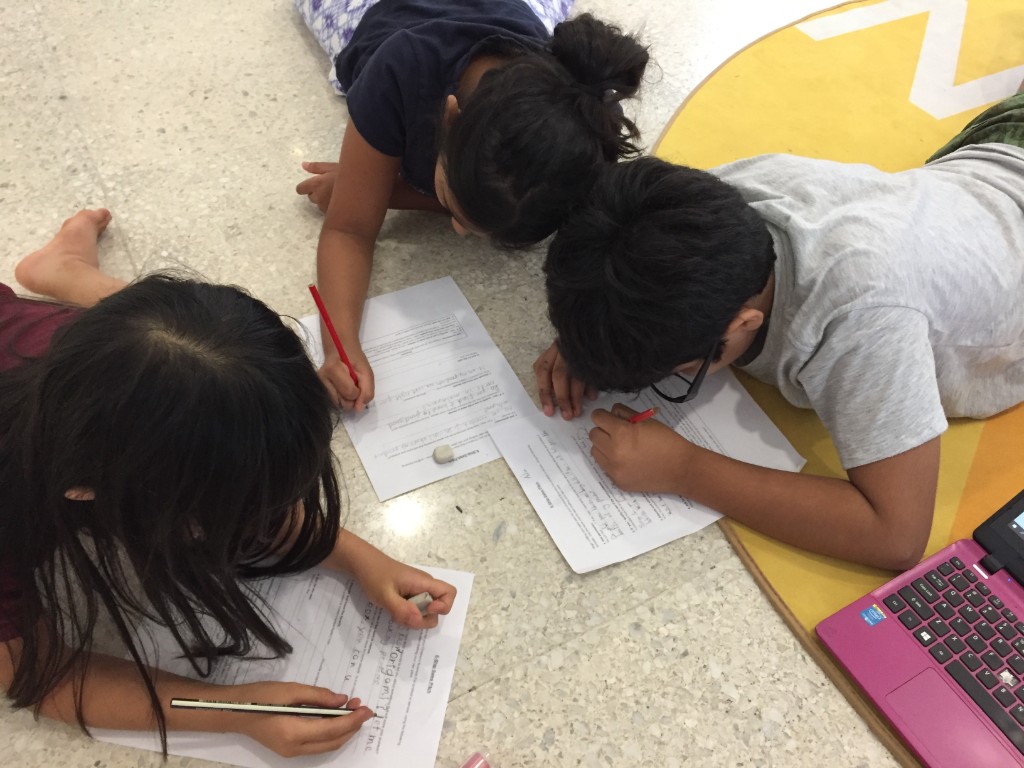
Our Eagles had been getting ready.


The Children’s Business Fair
I want to emphasize that CBF is a Children’s Business Fair. Children take charge from ideation to selling and have an entrepreneurship experience. They experience the hard work of preparation, the thrill of making sales, and the joy of reaping a profit. They also experience the stress of crunching deadlines or event pressure, the rejection from a potential customer, and the risk of making a loss. It is experiential learning at its best.
As organizers of the CBF event, we took great lengths to ensure parents and participants are fully briefed to allow this experience to happen. We even had a yellow card and a red card. The yellow card would have meant 30 minutes of time-out, and the red card meant the closure of the booth. We are glad to announce that we did not resort to issuing yellow or red cards. There were only four verbal warnings. We congratulate the parents and their relatives in taking the courage to step back and allow children to have the entrepreneurship experience.


It is this experience, of trusting and empowering the child that makes the CBF a magical event. This experience is an intense learning activity that as one parent said it:
The children expose themselves to all field—soft skills, communication skills, money mindset, profit & loss. Not to mention experiencing full range of feelings: joy for sales, upset, doubt (why no customer?), and so on.
Learning to Do, Learning to Be, and Learning to Learn
The CBF is very much a snippet of an Acton Academy’s experience: Learning to Do, Learning to Be, and Learning to Learn.
Learning to Do: The Three Seeds
- Make something with his or her own hands;
- Sell it (safely) to a stranger; and
- Experience the freedom (and responsibility) of having little extra spending money as a reward

Learning to Be: The idea of ownership and an entrepreneur.
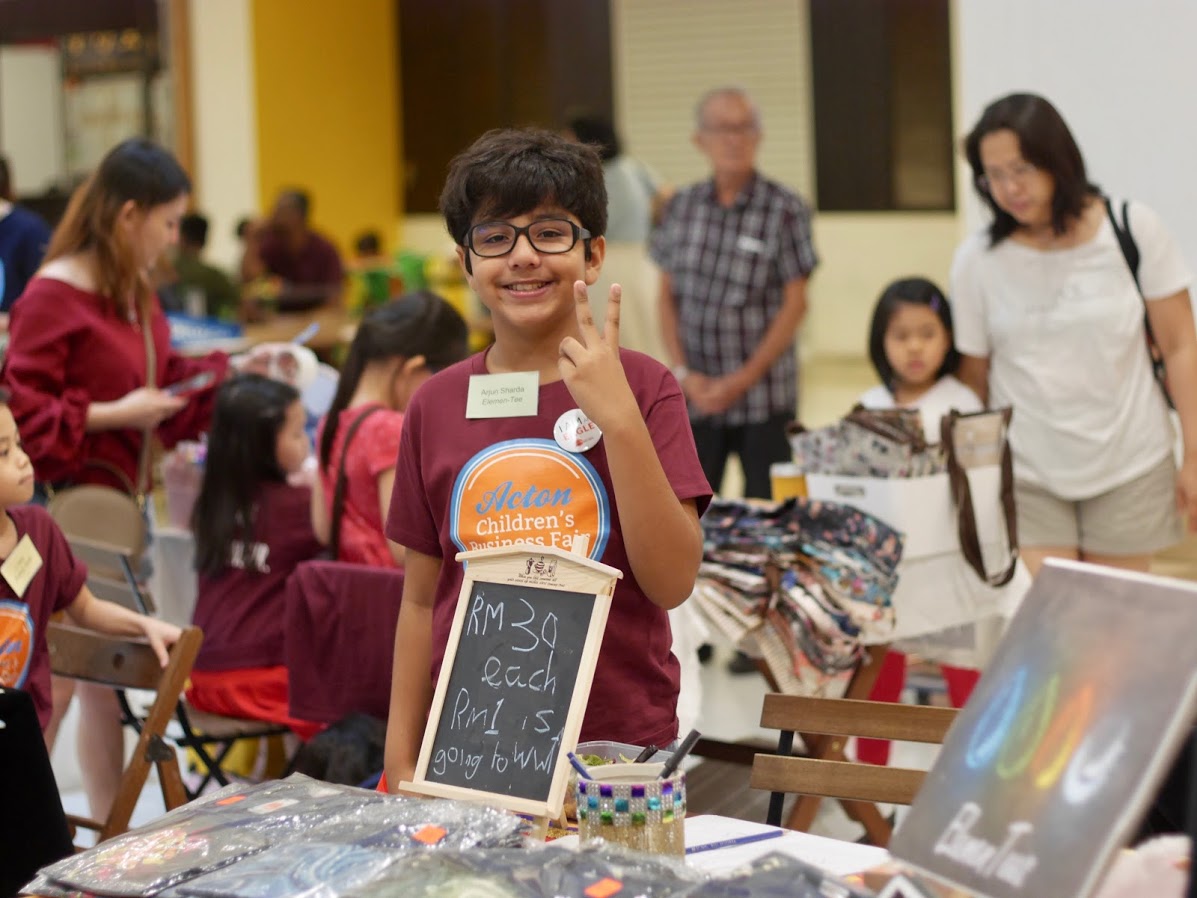
Learning to Learn: Participants tweak their sales pitch to see what works and what doesn’t. They discovered that even if their initial strategy didn’t work out, it could be a learning point. They learned that they could learn new skills and adapt.
Before the CBF, we were not sure if engaging the public with detailed information about getting children to step back works. We had to update our documentation several times. The parts about “parents stepping back, and what’s allowed” is almost 4-5 pages long. I’m glad to find parents giving their children the experience. We will introduce the other critical component of the Acton Academy model: Socratic Method. The next CBF includes guided questions so that parents can support the participants for a better learning experience next year :))
Getting Paid to Learn: Profit & Loss
Usually, organized learning activities cost money. Look at the range of summer holiday programs that are available in Kuala Lumpur. But in the Children’s Business Fair, most participants made money. On average, many far exceeded the RM50 fee. The average revenue was RM402, with an average profit of RM193. Excellent for 3.5 hours of sales.

Some participants made a loss. Their sales did not cover the cost, by RM245. You might think: oh dear, how sad. But let’s take a step back. This event was a good 6 hours, and most quality holiday programs cost more than RM40 per hour. And the lessons delivered in this one jam-packed event far exceed that of a class lecture of any sorts. It probably beats the average “chalk and talk” MBA school.
Then, some participants priced their wares competitively. They did not make much profit, but they were happy serving customers. They brought smiles to strangers and had a taste of doing something they passionately. That itself is brought much meaning and joy to them.

Many participants stepped out of our comfort zone. One of our Eagles, who spoke little English (she has spent the last two years in Japan) had to push her limits. She had to speak, and close sales. Here was the testimonial by her mom:
It was way more than I expected. The energy, the professionalism, and passion were there throughout the entire time. I was amazed to see how my daughter was a good sales-girl!!! We couldn’t have done it anywhere else.

So, every participant is a winner because they took the gift of the three seeds. They created, they sold, and they reaped the rewards (and consequence).
Future Capitalists
Three booths raked in more than RM1,000 of sales, with the top-grossing almost RM2,000. Is this capitalism, or income inequality? You might be glad to hear that many of the top sellers have a social bent, with a portion of their profit donating to charity and various causes. The fair is a microcosm of capitalism with a human heart, starting at the very young age. These are the people who will build our future.
Like Charlie Sandefer, the Children’s Business Fair co-founder said it: We are not afraid of the (unknown) future, because we are here to create it.

Winners
These were the nine winners. Three age group over three categories:
Category 1: Most Original Idea
6 to 8 years old – Cotorigami (Kotowa Date)
9 to 11 years old – Cool Poketmonsters & Dinosaur (Jean Jay Chong & Shin Jie Teh)
12 to 16 years old – Champion of The Gumdrop (Evan Au-yong)
Category 2: Highest Business Potential
6 to 8 years old – DIY healthy desserts (Nuha Shamin, Furqan Shamin, & Arfan Shakirin)
9 to 11 years old – Vangorro (Max Tong)
12 to 16 years old – Aqeeloma (Aqeesha Yusoff & Saloma Fallander)
Category 3: Best Presentation & Creativity
6 to 8 years old – Arts-out (Kimaya Sivabalan)
9 to 11 years old – Pomary (Joshua Chong & Sienna Chong)
12 to 16 years old – Sweet Balloons (Wong Wei & Wong Rui Yang)
A Special Mention to the Good Old Lemonade

I want to end with a Special Mention to Lemon Bros. They had the highest turnover—they sold 118 lemonades. That’s almost one lemonade every 100 seconds. Every time I walked past their booth, they were selling at least ten more lemonades. But that’s not the most impressive. It was their documentation of sales record. Every line item is backed by receipts or proof of purchase.
Their P&L records are accounting par excellence, with documentation of all receipts. All done by Aaron, ten years old, and Denzel, 11 years old.


The entrepreneurship experience doesn’t need to be of fancy ideas. Start simple. Lemonade, done with love, care, and attention to detail will still provide an immense experience. Possibly a good profit too.
Coincidentally, the Mikaila’s lemonade was the most successful business in the 10+ years of CBF history. She is a 13-year-old and a CEO to a $12 million a year business. Her first participation to the CBF happened nine years ago when she was just four years old.

[/fusion_text][/fusion_builder_column][/fusion_builder_row][/fusion_builder_container]